
Lampasas County landowner guide
Good land. Thoughtful stewardship. Understand your ag options.
Beekeeping and wildlife management can be useful ways to care for rural land. Here’s how agricultural appraisal works—and what to ask before choosing a plan for your acreage.
Explore beekeepingSee the cost examples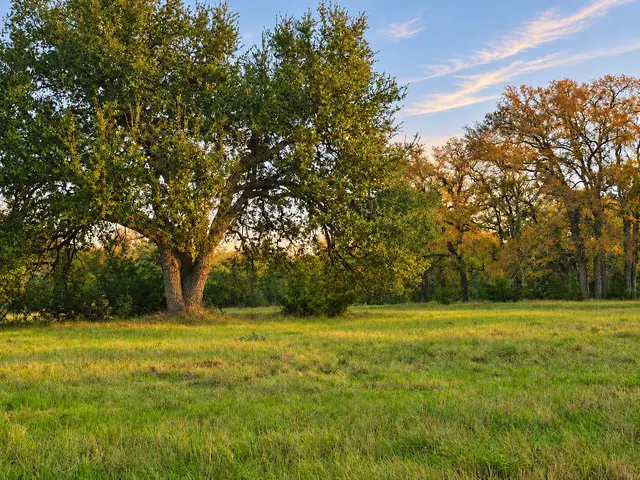
Valley Crest Ranch · Lot 6
“Ag exemption” means a different way to value qualifying land.
The land is generally appraised for agricultural productivity instead of its market value. That can lower the land’s taxable value, but it does not make the property tax-free. A home, homesite and other improvements may be valued separately. Agricultural appraisal is also different from the state’s agricultural sales-tax registration.
Under the usual 1-d-1 rules, qualifying agricultural use must have occurred during five of the preceding seven years. Prior land use can count when ownership changes, but a buyer should confirm the history and required new application. Putting hives on previously nonqualifying land does not bypass the history requirement.
Sources: Texas Comptroller: agricultural special appraisal and LCAD’s agricultural appraisal presentation.
For smaller acreage, bees may be worth a closer look.
Lampasas CAD’s published standards generally set a 20-acre livestock minimum. That is a tax-appraisal standard, not a blanket prohibition on keeping animals on smaller properties. Recreational horses or a few pets do not automatically create a qualifying agricultural operation.
Texas recognizes keeping bees for pollination or producing food or other products with commercial value on 5–20 acres. Lampasas specifies six colonies for the first five acres, plus one for each additional 2.5 acres. Use live, maintained colonies—not empty boxes.
Published hive-count benchmarks
| Eligible bee acreage | Colonies / hives |
|---|---|
| 5 acres | 6 |
| 7.5 acres | 7 |
| 10 acres | 8 |
| 12.5 acres | 9 |
| 15 acres | 10 |
| 17.5 acres | 11 |
| 20 acres | 12 |
These are calculations from LCAD’s published formula, not an individual approval. Ask CAD how it handles fractional acreage and homesite exclusions. A 10-acre parcel may have fewer than 10 eligible acres.
Confirm the whole plan.
Ask about qualifying land area, the required operating season, hive locations, documentation and any competing residential or livestock use. The Texas Beekeepers Association’s county compilation lists a seven-month annual bee season for Lampasas; confirm the current requirement with CAD.
Keep a map, service or purchase records, dated photos, colony counts, inspection notes and evidence of the qualifying production or pollination use. Beekeeping is an agricultural use; it is not automatically a wildlife-management designation.
LCAD intensity standards, pages 3 and 7 · Texas Beekeepers Association county reference.
Enjoy the land. Let a beekeeper handle the hives.
Managed-hive services can supply colonies, inspect them, maintain equipment and provide records. You remain responsible for the appraisal application and the property’s continuing eligibility.
One regional example, Walker Honey Farm, advertises limited Lampasas County availability. A previously published price reference was $200–$300 per hive, depending on distance, including maintenance and restocking failed hives. That works out to $1,600–$2,400 for eight hives or $2,000–$3,000 for ten. Obtain a current written quote; those are historical examples, not guaranteed current prices or availability.
For comparison, a previously published Timber Creek pricing guide described roughly $200–$350 per hive annually, with some locations higher. Treat this as a historical example, obtain a current written quote and confirm whether a provider serves your property.
Ask before signing.
- How many live colonies, for which months, at what total annual cost?
- Who owns the bees, equipment and honey—and replaces lost colonies?
- Are visits, feeding, pest treatment, travel and documentation included?
- What happens if the beekeeper stops service or CAD requests more evidence?
Provider links are research starting points, not endorsements or promises of appraisal approval.
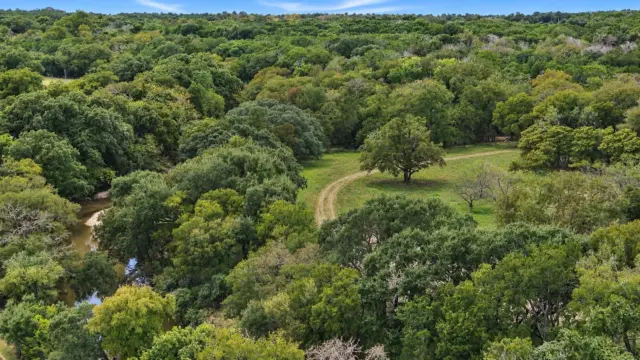
Actual Valley Crest Ranch acreage. Suitability and tax eligibility require a parcel-specific review.
What could the numbers look like?
Here is a simple hypothetical comparison, using the same assumptions for 10 and 15 eligible acres. It is not a Lampasas tax estimate or a quote for any Valley Crest lot.
Assumptions: land market value of $20,000 per acre; qualifying productivity value of $100 per acre; combined tax rate of 1.50%; all shown acreage eligible; annual managed-bee fee of $1,500. No home, improvements, other exemptions, startup fees or rollback taxes are included. Actual appraisal values and taxing units will differ.
| Annual illustration | 10 eligible acres | 15 eligible acres |
|---|---|---|
| Assumed market value | $200,000 | $300,000 |
| Land tax at market value | $3,000 | $4,500 |
| Assumed productivity value | $1,000 | $1,500 |
| Land tax if qualified | $15 | $22.50 |
| Illustrative annual bee fee | $1,500 | $1,500 |
| Tax plus bee fee | $1,515 | $1,522.50 |
| Illustrative net difference | $1,485 less | $2,977.50 less |
Math: (market value − productivity value) × tax rate − annual service fee. For example, if the fee were $2,400 instead, the illustrated net difference would be $585 on 10 acres and $2,077.50 on 15 acres. Without qualification, do not assume this reduction applies. Ask CAD for your account’s values and current taxing-unit rates.
Wildlife management is another path—with different rules.
Wildlife management generally continues an existing qualifying open-space or timber appraisal; it is not simply a way to qualify previously residential land by adding a feeder. A management plan and qualifying activities are required. Program-specific exceptions and acreage rules need CAD review.
LCAD’s published agricultural appraisal presentation states a local 20-acre wildlife threshold. State rules treat newly reduced or subdivided tracts differently from land that has not been reduced. Do not assume a new 10- or 15-acre tract qualifies for wildlife appraisal. Ask about the parcel’s history, subdivision timing and any qualifying association provisions.
At least three of seven wildlife-management categories must be actively used: habitat control, erosion control, predator control, supplemental water, supplemental food, supplemental shelter, and census counts. The plan should support native wildlife appropriate to the property. Songbirds can be part of a suitable plan; it does not have to be about deer.
Keeping healthy habitat is worthwhile in its own right. Tax qualification is a separate determination, and switching an already-qualified agricultural property to wildlife use is generally intended to preserve its productivity appraisal rather than create an additional tax discount.
TPWD wildlife-management forms and guidance · TPWD qualification FAQ · LCAD presentation, wildlife acreage discussion.
Want to keep the bees yourself?
It is a learnable, hands-on activity, with real ongoing care. Start with training and a mentor before buying the full qualifying colony count.
Learn and plan.
Take Texas A&M AgriLife’s Beekeeping 101 or a local course. Plan safe access, flight paths away from people and pets, water, forage, equipment and protective clothing. Discuss allergies and site safety with a qualified instructor.
Manage live colonies.
Inspect colony health and queen performance, maintain boxes and frames, monitor pests such as Varroa mites, and provide feed when conditions call for it. Get experienced help with swarm management, pest treatment and harvesting.
Document the operation.
Keep inspection logs, colony counts, photos, receipts, production or pollination evidence and application records. Confirm current registration and movement requirements with Texas Apiary Inspection Service; old intrastate-permit advice may be out of date.
Budget for more than boxes.
Allow for bees, equipment, protective gear, tools, feeding, pest management, replacement colonies, training and your time. Your first-year setup costs can differ greatly from an annual managed-hive fee.
Your first conversation with CAD
- Give the property ID, survey and proposed homesite area. Ask how many acres could qualify.
- Confirm current appraisal status and the documented agricultural-use history.
- Ask for the current bee or wildlife standards, deadlines, forms and required evidence.
- Ask what purchase, subdivision, a new home or a change of use could mean for eligibility and possible rollback taxes.
- Compare the actual productivity value and tax rates with a current service quote before choosing a plan.
Useful resources
Rules, forms, provider prices and availability can change. Verify directly with the relevant agency or provider. Nothing here represents approval for a Valley Crest lot.
Find the land that fits your plans.
Explore Valley Crest’s actual terrain, acreage and current pricing. Bring your land-use questions to CAD and your property questions to Rex.
Explore the tractsTalk with Rex